
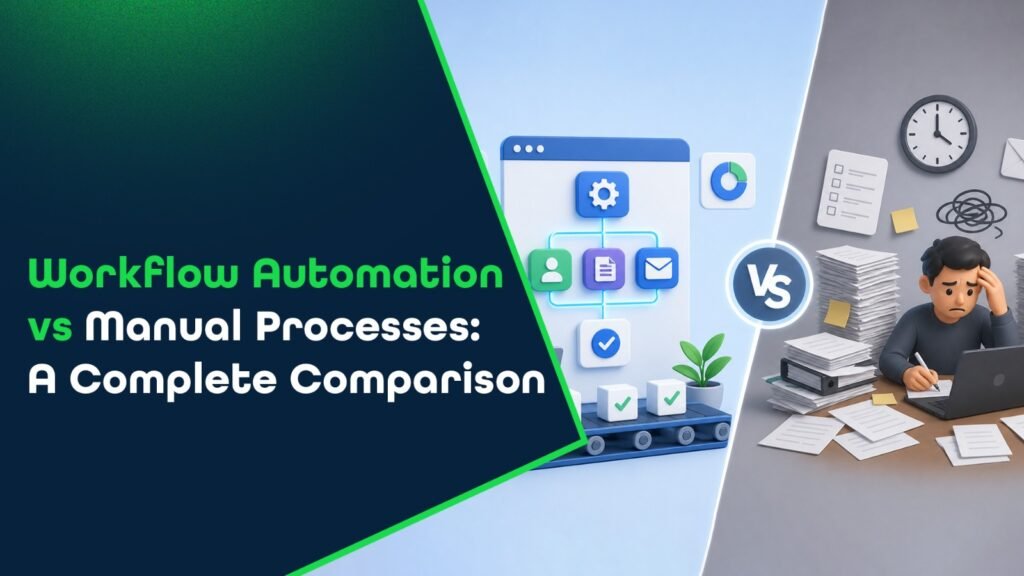
In today’s fast-moving business environment, companies are constantly searching for ways to improve efficiency, reduce operational costs, and increase productivity. One of the biggest decisions businesses face is whether to continue relying on manual processes or switch to workflow automation.
While manual methods may work for small tasks initially, they often become time-consuming and inefficient as businesses grow. Workflow automation, on the other hand, helps businesses streamline operations, improve accuracy, and scale faster using modern digital tools like CRM platforms and automated systems.
In this blog, we’ll compare workflow automation and manual processes in detail while exploring how platforms offering go high level support, flexible go high level pricing, and advanced go high level crm features are helping businesses transform their operations.
What Are Manual Processes?
Manual processes involve tasks completed entirely by humans without automation tools. These tasks may include:
- Sending emails manually
- Updating spreadsheets
- Managing leads by hand
- Scheduling appointments
- Following up with customers individually
- Tracking sales pipelines manually
Although manual systems may appear simple at first, they usually create bottlenecks as business operations grow.
What Is Workflow Automation?
Workflow automation uses software and technology to automate repetitive tasks and business operations. Instead of relying on manual effort, businesses create predefined workflows that automatically perform actions based on triggers and conditions.
For example:
- Automatically sending follow-up emails
- Assigning leads to sales teams
- Updating CRM records
- Sending appointment reminders
- Tracking customer journeys
- Automating invoices and reports
Platforms with advanced go high level crm capabilities make it easier for businesses to automate these tasks efficiently.
Key Differences Between Workflow Automation and Manual Processes
1. Speed and Efficiency
Manual processes are slower because every task requires human involvement. Employees spend significant time performing repetitive activities, which reduces overall productivity.
Workflow automation dramatically improves speed by handling repetitive tasks instantly. Automated systems can send emails, update records, and trigger workflows within seconds.
Businesses using automation platforms with strong go high level support often save dozens of working hours every week.
2. Accuracy and Error Reduction
Human errors are common in manual systems. Mistakes like incorrect data entry, missed follow-ups, or forgotten appointments can affect customer experience and revenue.
Automation reduces these risks by following predefined workflows consistently. Once workflows are properly configured, tasks are completed accurately every time.
This is one of the major reasons why businesses invest in modern go high level crm systems.
3. Scalability
Manual operations become difficult to manage as businesses grow. Hiring more staff to handle repetitive work increases operational costs.
Workflow automation allows businesses to scale efficiently without significantly increasing manpower. Whether you handle 100 leads or 10,000 leads, automation systems can manage workflows consistently.
This scalability makes automation far more cost-effective in the long term, especially when considering flexible go high level pricing options available for growing businesses.
4. Customer Experience
Customers expect fast responses, personalized communication, and smooth experiences.
Manual systems often cause delays in:
- Lead responses
- Appointment confirmations
- Follow-up messages
- Customer support
Automation improves customer engagement through:
- Instant replies
- Automated reminders
- Personalized workflows
- Faster support responses
Businesses using platforms with reliable go high level support can create better customer journeys while reducing workload on internal teams.
5. Reporting and Tracking
Tracking performance manually through spreadsheets can be overwhelming and inaccurate.
Workflow automation platforms provide real-time analytics and dashboards that help businesses monitor:
- Lead conversion rates
- Sales performance
- Campaign results
- Customer engagement
- Revenue growth
Modern go high level crm systems centralize this data in one place, making decision-making easier and more accurate.
Challenges of Manual Processes
Businesses relying heavily on manual operations often face:
- Higher labor costs
- Increased errors
- Slower response times
- Missed opportunities
- Difficulty scaling
- Employee burnout
As competition increases, manual systems become less sustainable for long-term growth.
Benefits of Workflow Automation
Companies switching to automation typically experience:
- Improved productivity
- Faster lead management
- Better customer communication
- Increased sales efficiency
- Reduced operational costs
- Improved team collaboration
- Higher ROI
Automation also allows employees to focus on strategic tasks instead of repetitive administrative work.
Why Businesses Choose Go High Level CRM?
Many businesses are now adopting platforms with advanced go high level crm functionality because they combine multiple business tools into one system.
Features often include:
- CRM management
- Workflow automation
- SMS and email marketing
- Appointment scheduling
- Sales pipeline management
- Reputation management
- Analytics and reporting
Additionally, flexible go high level pricing plans make the platform suitable for startups, agencies, and growing businesses alike.
Reliable go high level support also helps businesses set up workflows, troubleshoot issues, and optimize performance effectively.
Final Thoughts
The comparison between workflow automation and manual processes clearly shows that automation offers significant advantages for modern businesses.
While manual systems may work temporarily for small operations, they often create inefficiencies and limitations as businesses grow. Workflow automation improves speed, accuracy, scalability, and customer experience while reducing operational stress.
Businesses looking to stay competitive should strongly consider adopting automation platforms with powerful go high level crm features, responsive go high level support, and scalable go high level pricing options.
In today’s digital business landscape, automation is no longer a luxury — it has become a necessity for sustainable growth and long-term success.